
quarta-feira, 1 de abril de 2015

sexta-feira, 6 de março de 2015
Physical Fitness Attributes of Team-Handball Players are Related to Playing Position and Performance Level
para quem se interessa por Handebol, aí vai nosso resumo sobre a correlação que existe entre a posição, nível competitivo e a aptidão física dos jogadores!
Para baixar o artigo completo, entre no link https://

Para baixar o artigo completo, entre no link https://
Development and validation of a time-motion judo combat model based on the Markovian Processes
O que pode ser padrão de movimento em ações técnico-táticas de judô, como saber como atletas olímpicos fazem as transições entre uma ação e outra?

Heart rate, blood lactate and rating of perceived exertion responses during specific training of Goju-Ryu Karate Kata

http://combatsports.edu.pl/abstracted.php?level=5&ICID=1141978
quinta-feira, 18 de dezembro de 2014
Letter to Emanuela Pierantozzi
Some friends just make you think why and for who?
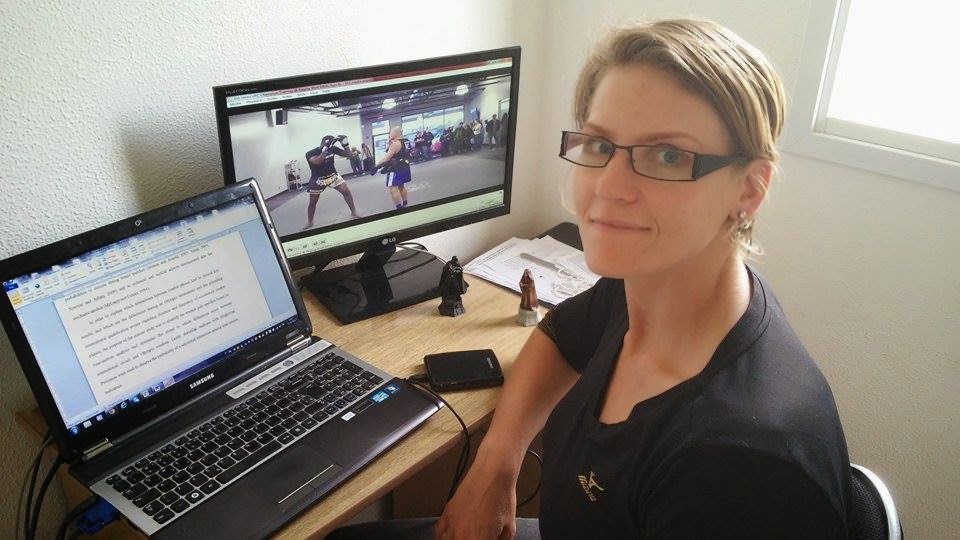
The fact is that I started doing performance analysis in master's and doctorate from what I had in judo and also I experienced in rowing. We all have dreams, we all want to believe deep in our souls, we have a special gift, we are able to make a difference, we can touch others in a special way and that we can make the world a better place. Maybe to live that try to convey to the athletes what I experience in quality work through the feedback of this type of assessment and targeting training. Give direction for training through this type of analysis allows the athlete to mold their own destiny, as with many athletes who could assist, for example, Leandro Guilheiro own it provided the treasury stock adjustments in fights through gestures that anticipated the actions of opponents, to the point it get wins the first consecrated the world ranking and Olympic medal.
Today, the challenge of my life is to restore my own dream and make it real, make myself and each athlete remember how much can improve in their methods, whether in the fight with tactical elements to be worked. I learned that the resources we need to turn a "practitioner" means a "latent potential" or even sticks a 'sport trickster "in a high performance athlete are available through hard work - the only thing needed is to awaken the potential of subject to turn your dreams into reality. What I do is to use the performance analysis as a tool to create strategies that help athletes to produce specific, measurable and lasting change in her/himself and other training partners. Use the performance analysis in order to assess what and how the athlete performs the technical and tactical actions in competition and in training. Thereby, raise the athlete's reference patterns, modify their beliefs that may be limiting and, in turn, change the strategies used in competition.
There is here a difference when I compare this work to my theory academic colleagues, the fact that I am an athlete and always have applied my analysis models and performance improvement in myself and in my athletes makes use many of the theories in practice making of useful information, because knowledge becomes power only when used to act. When I work with performance analysis I think not "add up" or make minor changes in the patterns of actions of athletes, but to build new paths to the point of making them highly unpredictable for opponents and thus make them get victory by the lack of possibility of the opponent anticipation and the slowness that opponent would have to respond to an "innovative" move. For this method of training or "teaching-learning" applied that many judo technical amounted my class, when I gave judo training in athletic USP. The meeting rooms, lectures and graduation I had the opportunity to talk always were full and not only interested in knowing what to do, but how to get the best of each athlete and get effective changes. You can understand, from my point of view, changing the form of a athlete thinking or acting in the match is to turn your focus.
I have full confidence in this work and so maybe have identified me with great professors in the area that it also think that we can contribute not only to set goals for athletes with the analysis, but also to help develop plans on how to achieve these goals massive and systematic actions plans. It is important that the coach and the athlete know that the same pattern of actions that led to the consecration of victories in the past it will not take them to where they want to go. In combat sport, we need to change, improve and being at least two steps strategically in front of the opponent.
That's why, that, primarily, when I created the Frami software for technical and tactical analysis in fights, several technological development companies in the sport came to me to provide consulting and own creation of other computer programs able to perform analyzes of technical actions tactics and cinematic. Curious, always asked where was the indication for the demand and the answer was always the same, the statement came from the materials made because of the innovation in performance analysis work for a qualitative model and mathematical able to see not only the frequency of actions at stake, but also the interaction between athletes and the type of correlation between the actions and reactions to each. Every moment of transition in a move represents both "danger" as "opportunity" and most analysts do not know make such an assessment, concentrating the focus on the frequency with which actions occur and not on how they are made. You need to evolve to give consistency to the actions themselves. However, having control over what is done in fights is not always easy, but it is essential for us to win what we really want.
Wake in the potential the athlete to achieve good individual performance and collective reveals how the decision-making system and how it can be used to achieve the goals of the tournament. Through performance analysis, assessments and training in innovative combinations is possible to break old, outdated tactical standards and promote major changes in the results.
Today, the challenge of my life is to restore my own dream and make it real, make myself and each athlete remember how much can improve in their methods, whether in the fight with tactical elements to be worked. I learned that the resources we need to turn a "practitioner" means a "latent potential" or even sticks a 'sport trickster "in a high performance athlete are available through hard work - the only thing needed is to awaken the potential of subject to turn your dreams into reality. What I do is to use the performance analysis as a tool to create strategies that help athletes to produce specific, measurable and lasting change in her/himself and other training partners. Use the performance analysis in order to assess what and how the athlete performs the technical and tactical actions in competition and in training. Thereby, raise the athlete's reference patterns, modify their beliefs that may be limiting and, in turn, change the strategies used in competition.
There is here a difference when I compare this work to my theory academic colleagues, the fact that I am an athlete and always have applied my analysis models and performance improvement in myself and in my athletes makes use many of the theories in practice making of useful information, because knowledge becomes power only when used to act. When I work with performance analysis I think not "add up" or make minor changes in the patterns of actions of athletes, but to build new paths to the point of making them highly unpredictable for opponents and thus make them get victory by the lack of possibility of the opponent anticipation and the slowness that opponent would have to respond to an "innovative" move. For this method of training or "teaching-learning" applied that many judo technical amounted my class, when I gave judo training in athletic USP. The meeting rooms, lectures and graduation I had the opportunity to talk always were full and not only interested in knowing what to do, but how to get the best of each athlete and get effective changes. You can understand, from my point of view, changing the form of a athlete thinking or acting in the match is to turn your focus.
I have full confidence in this work and so maybe have identified me with great professors in the area that it also think that we can contribute not only to set goals for athletes with the analysis, but also to help develop plans on how to achieve these goals massive and systematic actions plans. It is important that the coach and the athlete know that the same pattern of actions that led to the consecration of victories in the past it will not take them to where they want to go. In combat sport, we need to change, improve and being at least two steps strategically in front of the opponent.
That's why, that, primarily, when I created the Frami software for technical and tactical analysis in fights, several technological development companies in the sport came to me to provide consulting and own creation of other computer programs able to perform analyzes of technical actions tactics and cinematic. Curious, always asked where was the indication for the demand and the answer was always the same, the statement came from the materials made because of the innovation in performance analysis work for a qualitative model and mathematical able to see not only the frequency of actions at stake, but also the interaction between athletes and the type of correlation between the actions and reactions to each. Every moment of transition in a move represents both "danger" as "opportunity" and most analysts do not know make such an assessment, concentrating the focus on the frequency with which actions occur and not on how they are made. You need to evolve to give consistency to the actions themselves. However, having control over what is done in fights is not always easy, but it is essential for us to win what we really want.
Wake in the potential the athlete to achieve good individual performance and collective reveals how the decision-making system and how it can be used to achieve the goals of the tournament. Through performance analysis, assessments and training in innovative combinations is possible to break old, outdated tactical standards and promote major changes in the results.
Thank you again, and you make sure that I admire you so much for your beautiful path traced in the world of judo.
Bianca Miarka
quinta-feira, 9 de outubro de 2014
Ex-judoca, remadora do Bota desarma rapaz em assalto, mas acaba agredida - Surto Olímpico

O Botafogo conquistou neste domingo o título do Campeonato Brasileiro de Remo, em São Paulo, vencendo oito das vinte provas disputadas, seguido pelo Grêmio Náutico União de Porto Alegre e pelo Flamengo. Mas o fim de semana não foi só de alegrias para os alvinegros. Especialista no skiff single e inscrita no four skiff sênior, a remadora Bianca Miarka passou por uma situação um tanto quanto desagradável e não pôde competir em nenhuma das categorias. Ela sofreu um assalto perto da entrada da raia olímpica da Universidade de São Paulo (USP) e até conseguiu desarmar um dos assaltantes graças aos conhecimentos de artes marciais, mas teve pertences levados e foi agredida.
A loira de 31 anos foi judoca profissional, tendo integrado a equipe olímpica de 2004, em Atenas, como reserva. Ao ser abordada por dois homens em uma moto, um deles com uma arma de fogo, Bianca reagiu. Ela conseguiu tirar o revólver das mãos do rapaz, mas acabou sendo agredida pelo outro. Na confusão, eles fugiram, mas levaram alguns pertences da esportista e a deixaram bastante machucada. A remadora foi levada para o hospital e, segundo o diretor técnico do Glorioso, Marcelo Murad, passa bem no momento.
- A família dela reside em São Paulo e, por isso, a Bianca não ficou com a gente no hotel, ficou na casa dela, de onde ia para a raia. Ontem ela ia competir em duas provas. Ao descer do ônibus na entrada da raia olímpica, ela foi abordada por dois motoqueiros que, com uma arma, tentaram assaltá-la. Ela é ex-judoca, faixa preta, então, em um impulso, ela desarmou o homem. O outro, que estava por trás, a agrediu. Depois, eles fugiram. Ela se machucou muito, foi atendida no hospital. No momento, ela está bem. Ficou com uma contratura nas costas e não conseguiu remar. Tínhamos a Bianca inscrita no single skiff feminino sênior, que é a especialidade dela, e acabamos sem participar porque não pode haver substituição nessa prova. Ela estava inscrita também no four skiff feminino sênior. Tivemos que substituir a guarnição, colocamos duas outras meninas que se superaram e, mesmo sem treino, ganharam - explicou o dirigente.
A própria Bianca fez uma postagem em sua conta em uma rede social após o ocorrido. Ela reclamou da falta de segurança no entorno da USP. No dia 20 de setembro, o jovem Victor Hugo Santos desapareceu em uma festa dos 111 anos do Grêmio Politécnico no Velódromo da instituição. O corpo foi encontrado apenas na manhã de terça-feira, dia 23. Ele foi enterrado um dia depois, e a polícia ainda investiga para saber se houve crime ou morte acidental.
- Até quando precisaremos de um mártir social para melhorar a segurança e o policiamento nas regiões ao redor da USP e na própria Cidade Universitária? Quantos corpos terão que ser encontrados? Eu tive sorte de ter praticado 25 anos de esportes de combates, o que serviu para minha auto-defesa para desarmar o bandido e mesmo assim estou com diversas lesões. Quantos jovens e mulheres a mais precisarão ser encontrados mortos ou espancados no futuro por falta de segurança ou policiamento naquela região? - desabafou a atleta.
Bianca faz doutorado na Universidade de Pelotas, no Rio Grande do Sul. Sua carreira acadêmica gira em torno do judô profissional. Ela é pesquisadora em táticas da modalidade e autora de um software para esportes de combate, o FRAMI, que faz a análise técnica e tática de lutas e que já está sendo usado por vários treinadores de judô no mundo, em países como Espanha, Itália, México, Chile e no Leste Europeu. Por isso, mesmo competindo no remo, ela é uma referência internacional na modalidade.
Confira a postagem de Bianca abaixo:

1 ENAMEC

Faça sua inscrição, de acordo com a realidade brasileira, R$ 20,00. Deadline para envio de resumos científicos: dia 20/10/2014, o link para inscrição e para ver a programação está abaixo:
Assinar:
Postagens (Atom)